Public conversations surrounding urban water safety have shifted dramatically over the past several years, and a trusted water testing laboratory now plays a far more important role than simply checking for rust, sediment, or hard water minerals. Today, property managers need a more comprehensive diagnostic approach that can identify invisible, synthetic, and persistent environmental health hazards.
Chief among these modern concerns is the family of man-made chemical compounds known as Per- and Polyfluoroalkyl Substances, or PFAS, which are often called “forever chemicals” because they do not break down easily in the environment. Across Brooklyn, from large industrial redevelopments to multi-family residential buildings, testing for these trace contaminants has become an essential part of a modern water safety strategy, helping property owners protect residents, meet higher standards of care, and make informed decisions based on reliable scientific data.
Understanding the “Forever Chemical” Legacy
PFAS are a class of thousands of synthetic organic molecules defined by an incredibly strong atomic bond between carbon and fluorine atoms. Developed in the mid-20th century, these chemicals were celebrated for their unique ability to repel heat, water, oil, and grease. Because of their industrial utility, they became foundational ingredients in everyday commercial goods, including non-stick cookware, water-resistant apparel, stain-resistant carpeting, food packaging, and specialized firefighting foams.
The very characteristic that made PFAS highly effective for industrial manufacturing—their extreme chemical durability—is what makes them an ongoing environmental challenge. When these compounds leach into soil or water, they do not degrade. Instead, they travel through aquifers and surface water systems, bioaccumulating over time in ecosystems and the human body.
According to guidelines established by the United States Environmental Protection Agency (EPA), even infinitesimal, trace-level exposure to specific PFAS compounds over long periods is associated with chronic health vulnerabilities, making the tracking of these compounds a paramount public health priority.
The Intersection of Federal Mandates and State Accountability
The regulatory landscape governing drinking water has adjusted rapidly to keep pace with evolving toxicological research. New York State has been at the forefront of this movement, establishing highly protective maximum contaminant levels (MCLs) for the two most common PFAS compounds: perfluorooctanoic acid (PFOA) and perfluorooctane sulfonic acid (PFOS).
At the federal level, enforcement frameworks require public water utilities nationwide to execute comprehensive screening programs, working toward strict parts-per-trillion compliance baselines. Because these regulatory targets are continuously evolving, relying strictly on a generic, historical city wide report can obscure real-time local dynamics.
For property owners, landlords, and commercial facilities throughout Kings County, integrating address-specific PFAS screening into an independent environmental program ensures that internal water systems meet or exceed both existing and upcoming local safety thresholds.
Why Brooklyn Infrastructure and History Invite PFAS Concerns
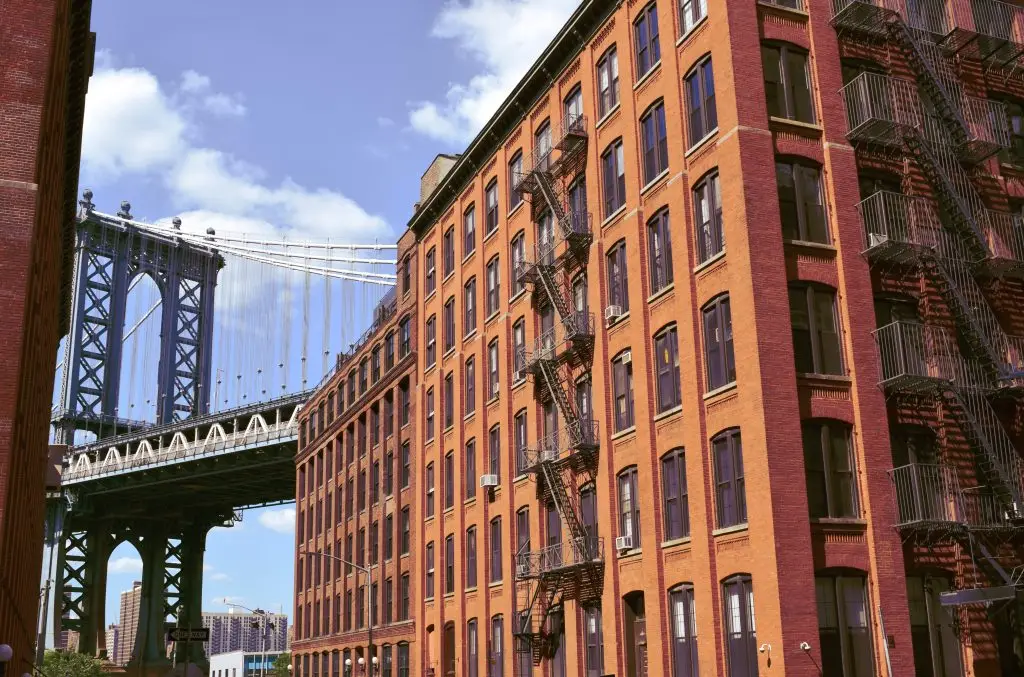
Brooklyn’s unique industrial and architectural history directly influences its modern environmental profiles. Long before neighborhoods like Greenpoint, Williamsburg, DUMBO, and Gowanas transformed into premier residential and commercial hubs, they were the manufacturing engines of New York City. For generations, Brooklyn’s waterfronts and inland districts housed metal plating facilities, textile mills, chemical blending plants, and commercial dry cleaners—all industries that historically utilized PFAS compounds or related surfactants in their daily operations.
While the municipal water mains running beneath Brooklyn’s streets transport water drawn from protected upstate reservoirs, localized distribution systems remain complex. Minor infrastructure anomalies, historical groundwater migrations, or regional construction and water main repairs can cause shifts in local water pathways.
For property managers overseeing historic estates, retrofitted industrial lofts, or high-occupancy Brooklyn buildings, independent point-of-use validation provides an invaluable layer of protection that bridges the gap between public utility oversight and internal building safety.
Expanding the Scope of Traditional Analysis Panels
Historically, standard residential and commercial water tests focused almost exclusively on a narrow set of parameters easily identifiable by human senses or standard chemical reagents:
- Heavy Metals: Screening for lead and copper leached from older internal building plumbing.
- Microbiology: Verifying the absence of coliform bacteria or E. coli.
- General Chemistry: Measuring hardness, pH, and corrosivity to protect heating elements and appliances from scale.
While tracking these traditional parameters is vital for managing immediate plumbing risks and localized water quality issues, a truly complete water safety framework must expand to incorporate advanced molecular assays.
Unlike iron or sediment, which announce their presence via discoloration or cloudiness, PFAS are completely invisible, odorless, and tasteless. They exist at concentrations measured in parts per trillion ($1 \text{ ppt}$ is equivalent to a single drop of water inside an Olympic-sized swimming pool). Detecting these compounds requires highly sensitive, specialized laboratory instrumentation, such as liquid chromatography-tandem mass spectrometry (LC-MS/MS), which can isolate and quantify specific fluorinated molecules with absolute precision.
| Parameter Type | Common Examples | Primary Indicator | Standard Mitigation |
| Physical / Aesthetic | Iron, Scale, Hardness, Sediment | Discoloration, Metallic Taste, White Mineral Crust | Sediment Filtration, Ion-Exchange Softeners |
| Microbiological | Total Coliform, E. coli, Legionella | Bacterial Cultures, Biomarkers | UV Sterilization, Chlorine Dioxide, Thermal Flushing |
| Synthetic Chemical | PFOA, PFOS, GenX, PFHxS | None (Invisible, Odorless, Tasteless) | Granular Activated Carbon (GAC), Reverse Osmosis |
Actionable Risk Management for Modern Properties
For real estate developers, co-op boards, and residential homeowners looking to modernize their building maintenance protocols, incorporating advanced chemical assays into standard operations follows a straightforward pathway:
- Conduct an Advanced Baseline Assessment: Run a highly comprehensive potability panel that couples traditional infrastructure metrics with a targeted PFAS target list to identify any underlying background concentrations.
- Review High-Occupancy Vulnerabilities: Prioritize testing in structures housing sensitive populations, such as multi-family apartment communities, daycare centers, senior living facilities, and commercial food production spaces.
- Calibrate Filtration Systems Geometrically: If trace-level synthetic chemicals are identified, standard carbon pitchers will fall short. Properties should deploy certified whole-building Granular Activated Carbon (GAC) systems or advanced point-of-use Reverse Osmosis (RO) membranes designed specifically for ultra-low particle extraction.
- Schedule Periodic Monitoring: Environmental baselines are dynamic. Scheduling an annual or semi-annual review ensures that your filtration media remains fully active and has not reached chemical saturation.
Elevating Property Value and Public Confidence
In a highly competitive real estate market like Brooklyn, transparency regarding environmental health is a profound asset. Savvy tenants and prospective buyers are increasingly asking detailed questions about the indoor environmental quality (IEQ) of the spaces they inhabit—including air purity and water integrity.
By proactively including PFAS testing in regular building maintenance schedules, property managers can offer clear, verified documentation that provides total peace of mind to occupants.
To learn more about implementing an advanced testing regimen or to schedule a laboratory-grade assessment for your commercial or residential property, explore the diagnostic capabilities available at Water Testing Brooklyn and take complete command of your building’s environmental health.