
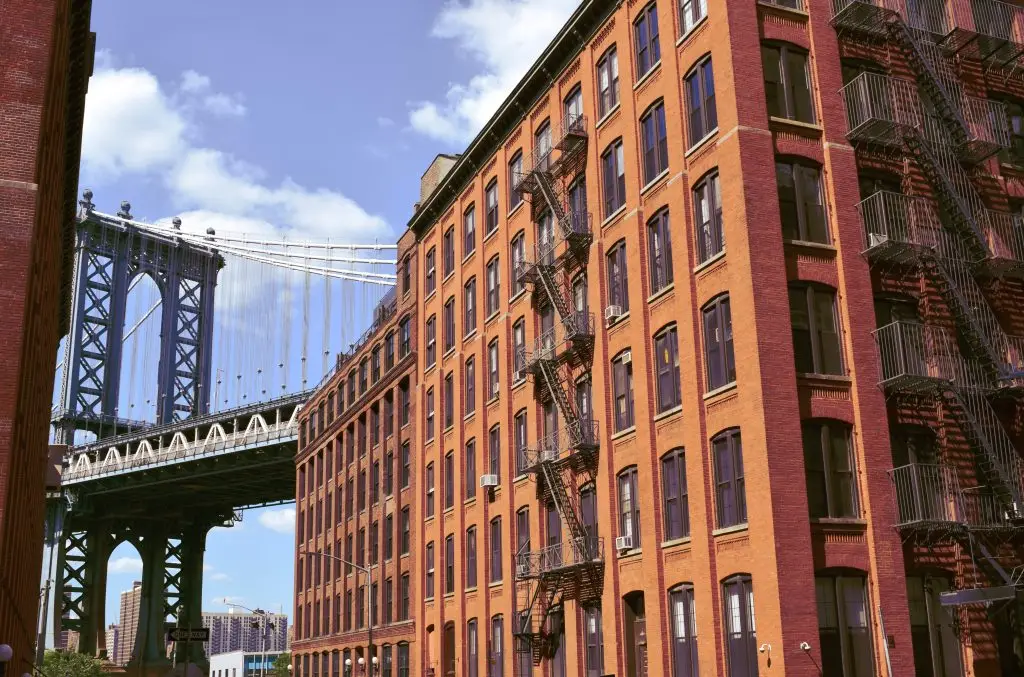
Bedford-Stuyvesant—affectionately known as Bed-Stuy—stands as one of Brooklyn’s most expansive, culturally significant, and architecturally iconic neighborhoods. Characterized by its sweeping blocks of historic Victorian brownstones, brick walk-ups, and an increasing footprint of modern, multi-family mid-rises, Bed-Stuy represents a highly competitive real estate arena.
For the property managers, housing co-ops, and asset directors overseeing these developments, the operational landscape is uniquely demanding. Maintaining high tenant retention while safeguarding century-old structural networks requires data-driven precision. When it comes to verifying indoor environmental safety, relying on generic neighborhood reports or basic pass-fail checkboxes is an operational risk. To protect long-term property values and secure the health of their communities, Bed-Stuy property managers need comprehensive, building-specific water quality benchmarks.
The Structural Footprint of a Vintage Neighborhood
To understand why generic water data fails Bed-Stuy building managers, one must examine the hidden infrastructure behind the neighborhood’s historic façades. While municipal water distributed across Brooklyn complies with stringent health metrics enforced by the New York City Department of Environmental Protection (DEP), the final chemical layout at a tenant’s kitchen tap depends entirely on the building’s internal plumbing matrix.
Historical data, including independent municipal tracking reports, has routinely identified Bed-Stuy as an area with elevated baseline risks for localized heavy metal traces, particularly lead. This baseline condition is directly tied to the neighborhood’s unique architectural history:
- Legacy Service Lines: Many pre-war structures across the neighborhood still draw water from the city street mains via vintage lead or early galvanized iron lateral service lines.
- The Hybrid Riser Problem: Over generations of tenancy, localized apartment modernizations have created a patchwork environment where modern PEX or copper lines are directly coupled to vintage distribution headers.
- Lead-Bearing Alloys: Mid-century copper modifications frequently utilize lead-bearing solder joints, while legacy brass faucets and shut-off valves contain higher allowable heavy metal trace percentages than modern, lead-free fixtures.
Because water acts as an active natural solvent, its interaction with these hybrid utility networks creates highly localized chemical profiles that vary wildly from one building address to the next.
The Risk of Baseline Complacency: Leading vs. Lagging Indicators
A common mistake in high-volume property management is utilizing a standard water screening kit and treating a “passing” heavy metal score as a permanent certification of safety. This binary approach ignores the underlying water chemistry that dictates structural longevity and occupant health.
A standard water report might show that a third-floor apartment’s drinking water features a lead level of $11 \text{ ppb}$—technically passing the federal action threshold of $15 \text{ ppb}$ enforced by the Environmental Protection Agency (EPA). While this satisfies immediate regulatory compliance, an advanced analytical framework views this score as an active warning indicator.
[Unbuffered Water Profile] ➔ [Negative Saturation Index] ➔ [Mineral Scale Stripped Away] ➔ [Accelerated Internal Pipe Decay]
                                                                                               │
                                                                                               ▼
[Catastrophic Joint Leak] ◄─ [Pinhole Wall Fractures] ◄─ [Creeping Metal Leaching Spikes] ◄────┘
A heavy metal score that close to the legal ceiling confirms that active chemical leaching or internal pipe degradation is occurring somewhere within the vertical riser lines. Property managers who adopt an explicit water testing strategy can monitor these parts-per-billion ($\text{ppb}$) trends year-over-year, catching creeping heavy metal spikes and infrastructure decay long before they trigger tenant liability cases or costly emergency repairs.
Stagnation Dynamics in High-Occupancy Bed-Stuy Developments
The architectural layout of Bed-Stuy’s multi-family housing options introduces unique fluid dynamics that directly impact water safety. In multi-unit properties with volatile tenant configurations or seasonal turnover, water can sit completely motionless inside extensive horizontal mains and vertical risers for long intervals.
Water stagnation serves as the primary catalyst for deep water quality issues in urban properties:
Disinfectant Decay
The residual chlorine protectants added during municipal treatment naturally dissipate into the air during periods of inactivity. Once the free chlorine level drops, the water loses its primary chemical shield against biological growth.
Biofilm Proliferation
Without active chlorine, microscopic microbial communities can settle along the inner walls of the pipes, producing a resilient, gelatinous slime matrix known as a biofilm. Biofilms anchor themselves to legacy iron or copper pipe scale, shielding bacterial colonies from normal water flow.
Corrosion Index Shifts
Stagnant water allows localized chemical reactions to run to completion, accelerating the rate at which metals dissolve into the water column. This makes first-draw tracking non-negotiable for property managers supervising multi-tenant Brooklyn buildings.
| Benchmark Metric | Basic Screening Standard | Comprehensive Building Benchmark | Practical Property Value |
| Heavy Metals | Identifies if lead exceeds a single threshold limit. | Tracks exact parts-per-billion ($\text{ppb}$) values over time. | Acts as an asset warning system to detect internal pipe leaching. |
| Corrosion Chemistry | Omitted entirely from standard screening. | Evaluates full pH, alkalinity, TDS, and LSI scores. | Predicts and prevents pinhole leaks and boiler scale accumulation. |
| Disinfectant Profiles | Typically completely ignored. | Measures exact free and total chlorine residuals. | Pinpoints low-flow stagnant zones vulnerable to biofilm accumulation. |
| Remediation Target | Leads to blind, generic filter expenditures. | Provides explicit, laboratory-grade chemical diagnostics. | Allows for precision point-of-entry or point-of-use filtration engineering. |
Establishing an Advanced Operational Benchmark Protocol
To transition from a reactive posture to an advanced, data-driven utility management model, Bed-Stuy building directors should execute a systematic benchmarking routine:
- Forensically Audit Plumbing Layouts: Locate the primary water line entry point in the basement and document all visible transitions between legacy galvanized headers and modern copper or PEX loops.
- Execute Spatial Multi-Point Testing: Do not sample from a single utility sink. Collect water samples from multiple zones of the asset—including the incoming basement water meter, central hot water loops, and the furthest upper-floor kitchen taps—to establish an accurate chemical baseline across the structure.
- Utilize Strict First-Draw Methods: To accurately capture the chemical footprint of a property’s internal pipes, collect water samples first thing in the morning immediately following a documented six-hour period of plumbing stagnation.
- Maintain an Active Digital Ledger: Archive certified laboratory data on an annual cadence. Maintaining an uncompromised historical log provides concrete proof of meticulous property stewardship, which is invaluable during real estate refinancing, insurance renewals, or tenant lease negotiations.
Protecting Asset Values and Tenant Trust
Operating a multi-family or commercial development in Bedford-Stuyvesant requires looking past cosmetic upgrades and actively mastering the hidden utility networks that sustain daily operations. By investing in sophisticated, building-specific water quality benchmarks, property managers protect their multi-million dollar mechanical infrastructure, eliminate regulatory blind spots, and ensure a pristine, uncompromised water supply for every resident.
To learn how a tailored, laboratory-grade analysis can secure the environmental integrity of your property asset, explore the advanced diagnostic services available at Water Testing Brooklyn and optimize your building’s utility management today.